Helpless/Hopeless

Breaking Bad News… For Real
“We’re trying to save lives. Sometimes you just can’t do that.”
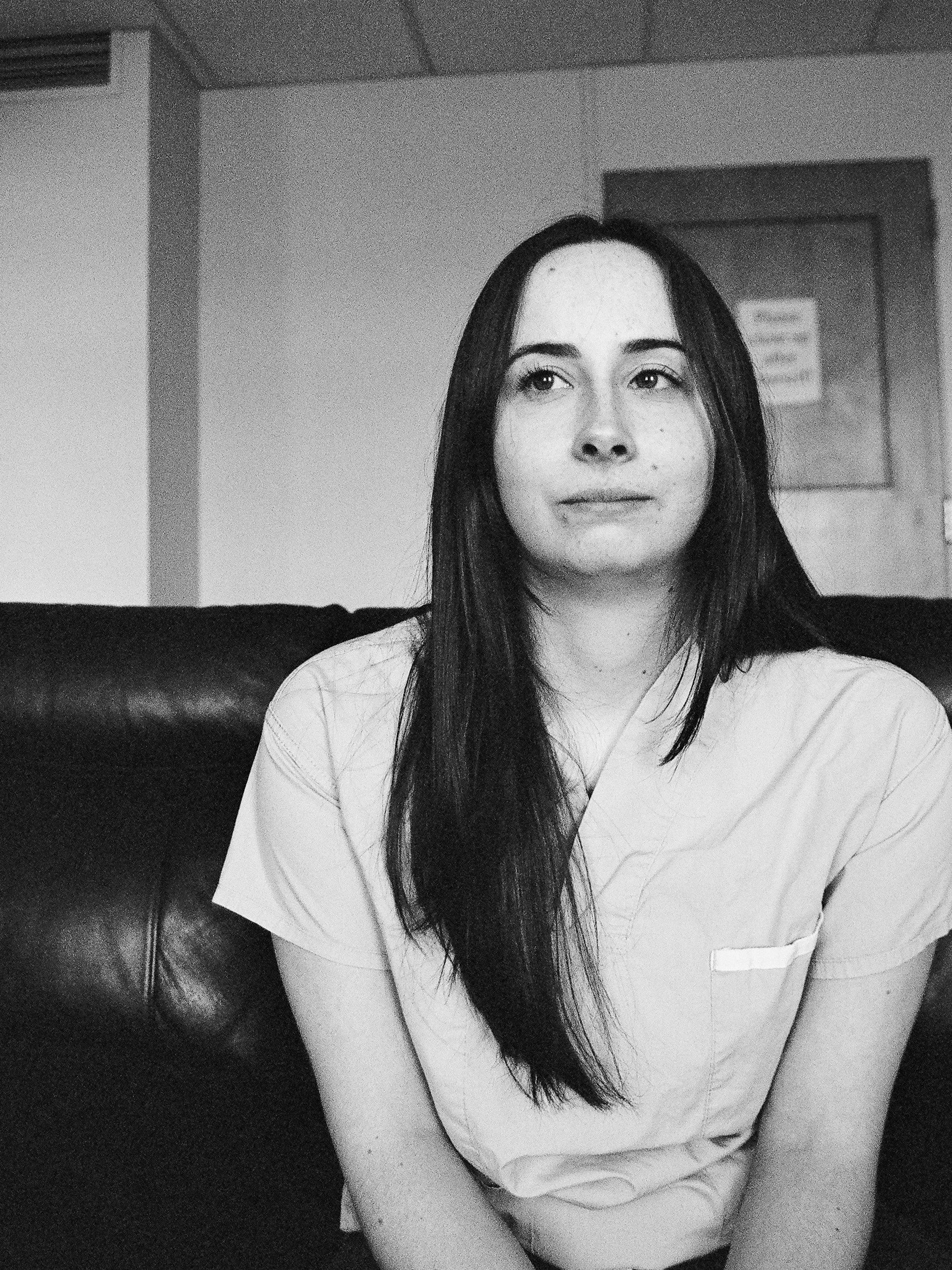
I was working in the emergency department on my rural family medicine rotation. A woman in her 60s came in, and she was complaining of chest pain with shortness of breath. So, you know, we take a whole history and do an exam, and automatically just based on that we're thinking it’s a pneumothorax. She had that classic presentation. So we're thinking of doing a CT scan, workup for pneumothorax and a pulmonary embolism, and some cardiac stuff. Unfortunately, there was no access to a CT so we had to send her somewhere else.
When we get the results for the CT scan, we see that she has huge masses in her lungs, and her kidneys, as well as some that had metastasized to her spine. That was not what we were considering at all so it was quite a shocking revelation. She had a remote cancer history, but it was many, many decades ago and it had been treated. She had never had any recurrence and she was routinely being seen by a family doctor for monitoring. Overall, she was a pretty healthy patient. But all of a sudden—
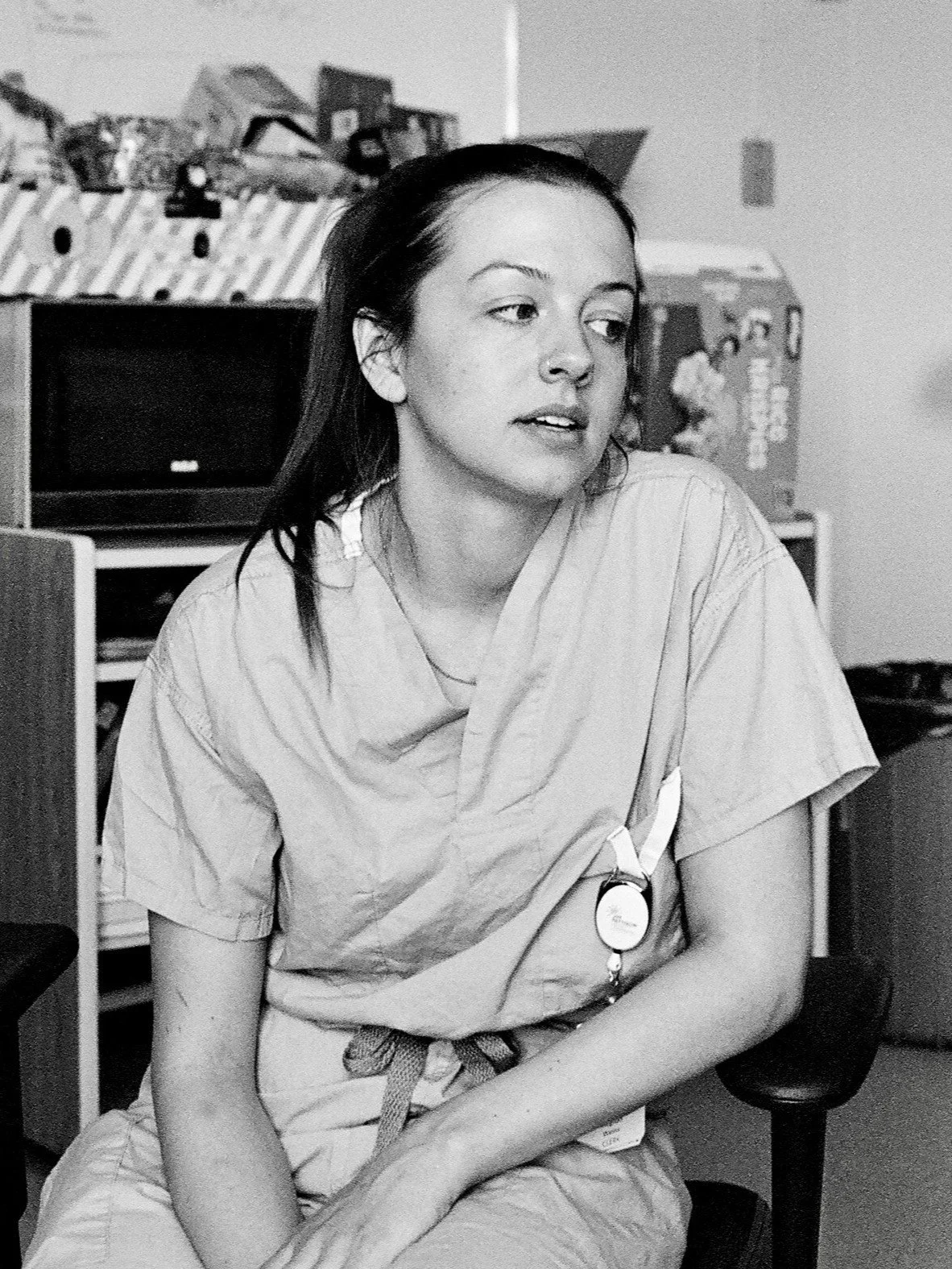
The attending was like, “Oh, well, why don't you break the bad news to her?” So, me as a medical student, going in and being like, “Hey, actually, it's not a pneumothorax and is in fact, cancer.” It was definitely difficult for me, especially considering this was actually my first emergency shift on the rotation. I truthfully just couldn't imagine how hard it must be to hear from the patient's point of view. Her husband had actually passed away from cancer about a year ago and she had taken quite a bit of time to really get over that. And then for her to get that diagnosis of cancer… and because it was metastatic, and because it was lung cancer, she was palliative. I just remember her expression. It was almost like she just went blind. There wasn't any sadness. There wasn't any grief. There wasn't any shock. It was almost an expressionless face. She sat there silently, taking it in. I went through the options that she had, and talked about palliative care, that we can still try to treat this medically but I didn’t know how successful it would be truthfully, and about pain relief. By the time I was done, she just said, “Okay, that's okay. Thanks for telling me.” And that's all that there was. I left the room, and I could hear her starting to sob in the background. I felt so terrible because it was almost like she was trying to stifle her crying, which made it even harder. It was a wake up to reality because at the end of the day, yes, we're training to be in a profession where we're trying to, as cliche as it is, we’re trying to save lives. Sometimes you just can't do that.
How do you think that this is going to impact your future practice and your relationship and interactions with patients?
I think it would make sense to list out all the things that we're considering and lay the groundwork so the patient’s not completely in shock. I mean, it was a shock for us, it was not something that we were really thinking. It was very, very low on our differential so it wasn't really something that we even mentioned to her. We learn about breaking bad news in Advanced Communication Skills but it's one thing to do it on an OSCE station, but it's completely a different situation when you're doing it in real life, knowing that there are implications for what you say and how you frame things. It's really important that you not only explained what's going on clearly, but make sure you give the patient every single option available. This isn't just something that you can dismiss, this is going to affect them for the rest of their lives.
More Conversations in TCL
-
![]()
“We’re trying to save lives. Sometimes you just can't do that.”
-
![]()
“We’re in a failing system.”
-
![]()
“I remember hearing her scream.”
-
![]()
“It was sad to see what he knew to be true was slipping away.”
-
![]()
“We would talk about coffee shops, and the vampire diaries, and just normal mundane teenager things.”
-
![]()
“She introduced me to her daughter and said, ‘This is my friend. He’s been listening and helping so much.’”
-
![]()
“If we're grieving someone, that means that there was a connection there.”
-
![]()
“The weather was beautiful. You truly couldn't have asked for a more perfect day.”
-
![]()
“It felt so weird to be stitching him back up when all he wanted was to leave this world.”
-
![]()
“I didn’t realize how slippery babies were.”
-
![]()
“After all the textbooks, after all the knowledge, there will always be unpredictable things.”
-
![]()
“It’s amazing and barbaric at the same time.”
-
![]()
“Parents are good advocates and just know their children best.”
-
![]()
“Continuity of care allows us to be part of someone's history.”